Hydrogen Fuel Cell Technology
Hydrogen is the most abundant element in the universe. It’s in everything, all around us. It’s non-toxic and easily stores for extended times. Hydrogen fuel cell forklifts combine the sustainability of an electric forklift with the practicality and short refuelling time of an internal combustion engine.
Hydrogen fuel cell forklifts combine the benefits of an electric forklift with the practicality and shorter refuelling time of an internal combustion engine forklift. If you wish to switch to this solution, you'll need to make initial changes to your facility to include the right hydrogen infrastructure including hydrogen sourcing.
Fuel cells generate electricity when hydrogen meets oxygen in the electrolysis process, driving the electric motor and generating water as a waste product. Hydrogen made with renewable energy is completely carbon-free. When turning it into electricity, the only emission is distilled water.
Learn more about Toyota 1.8 Tonne 70-8FBE Hydrogen Fuel Cell Forklift
The fuel cell system on a forklift consists of the fuel cell stack, the hydrogen tank, a small lithium-ion battery to temporarily store surplus energy, and a fan. All this is contained in a cast frame the size of a classic lead-acid battery and can be installed relatively easily in a conventional electric forklift.
Inside the fuel cell stack, the hydrogen is mixed with air, where it reacts with the oxygen in the air to produce water. During this chemical reaction, electrical energy is released; this energy is collected and used to drive the electric motors that power the forklift’s propulsion, lift and tilt systems.
Benefits of fuel cell forklifts?
Fuel cell is beneficial for complex, large forklift fleets with multiple shifts where battery exchange is needed. Some benefits:
Energy-grade hydrogen is obtained by separating it from the other elements in the molecules where it occurs (such as water, hydrocarbons, and biomass). The two most common methods for doing this are steam reforming and electrolysis. Of these, electrolysis is considered the cleanest process.
Switching to fuel cell forklifts requires an up-front investment in the hydrogen infrastructure for your facility. That investment starts to pay itself back through regular savings in operational costs. How long it takes to fully pay off depends on the nature of your operation – it’s worth analysing this carefully before deciding whether a fuel cell solution is right for you.
*Toyota 4-Wheel Hydrogen Fuel Cell Forklifts not available in Australia.
In general, a fuel cell forklift solution will make the most business sense for large fleets based at one location. Operations where forklifts undergo multi-shift use, or frequent battery changes, will also see a quicker return.
Toyota Forklifts powered by fuel cell technology are limited to certain models, for more information please contact Toyota Material Handling Australia.
*Toyota Hydrogen Fuel Cell forklifts are available via rental only and limited to selected Toyota forklift models. Availability is subject to suitable hydrogen infrastructure being in place, including hydrogen supply and refuelling capability. Toyota 4-Wheel Hydrogen Fuel Cell Forklifts not available in Australia.
The Toyota 1.8 Tonne Hydrogen Fuel Cell Forklift delivers zero operating emissions, fast refuelling and consistent power. Designed to support efficient multi-shift operations, it combines Toyota’s legendary reliability, world-leading safety and operability delivered by Toyota's ergonomically designed operator, with the benefits of hydrogen energy.
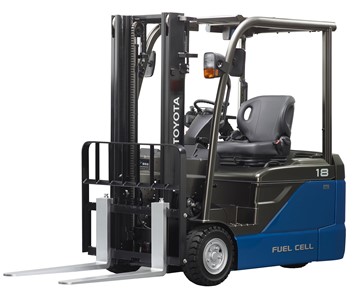
Combines the benefits of an electric forklift with the practicality of an internal combustion engine forklift.